In the world of literature, some writers do more than


In the world of literature, some writers do more than

Born and raised in Germany, Wellingta represents a new generation of international
In Hollywood, the most memorable characters are often defined long

Livestreaming is one of the most powerful forms of digital

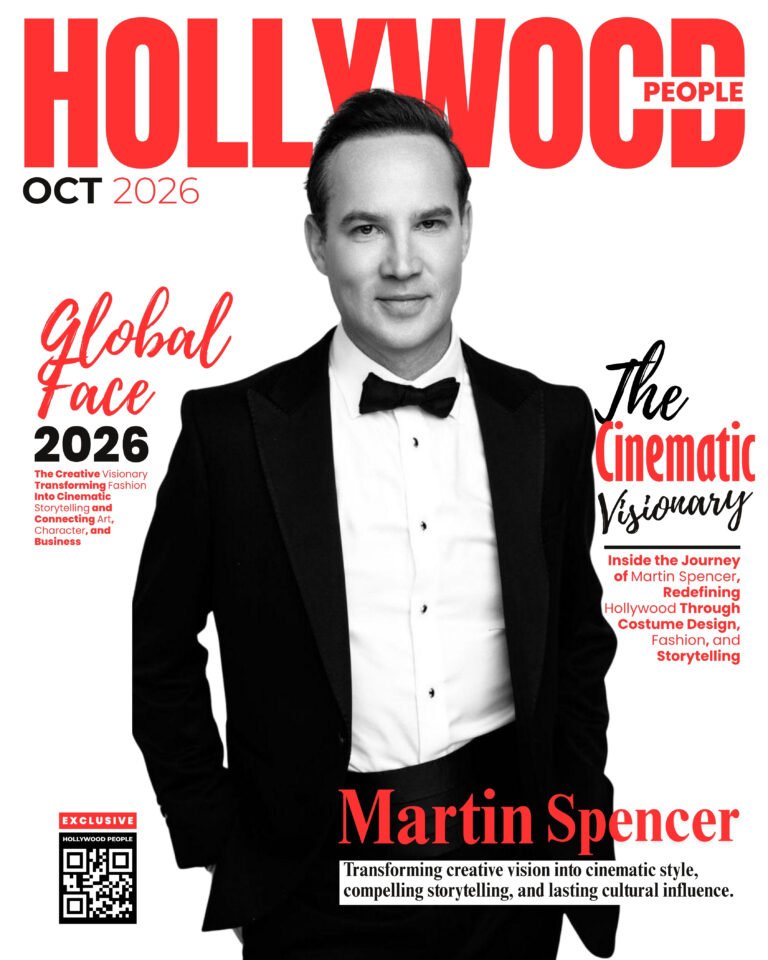
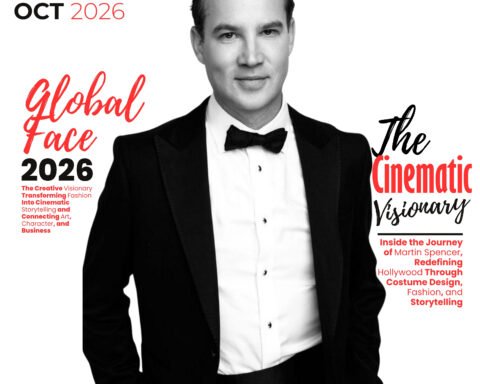
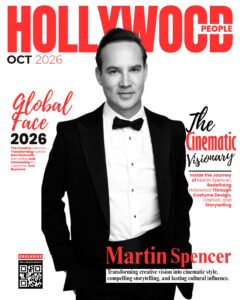
In Hollywood, the most memorable characters are often defined long before they deliver their first line. Their clothing reveals their ambitions, insecurities, histories and identities, creating a visual language that audiences instinctively understand.
For Martin Spencer, costume design is not simply about making someone look extraordinary. It is about making them believable.
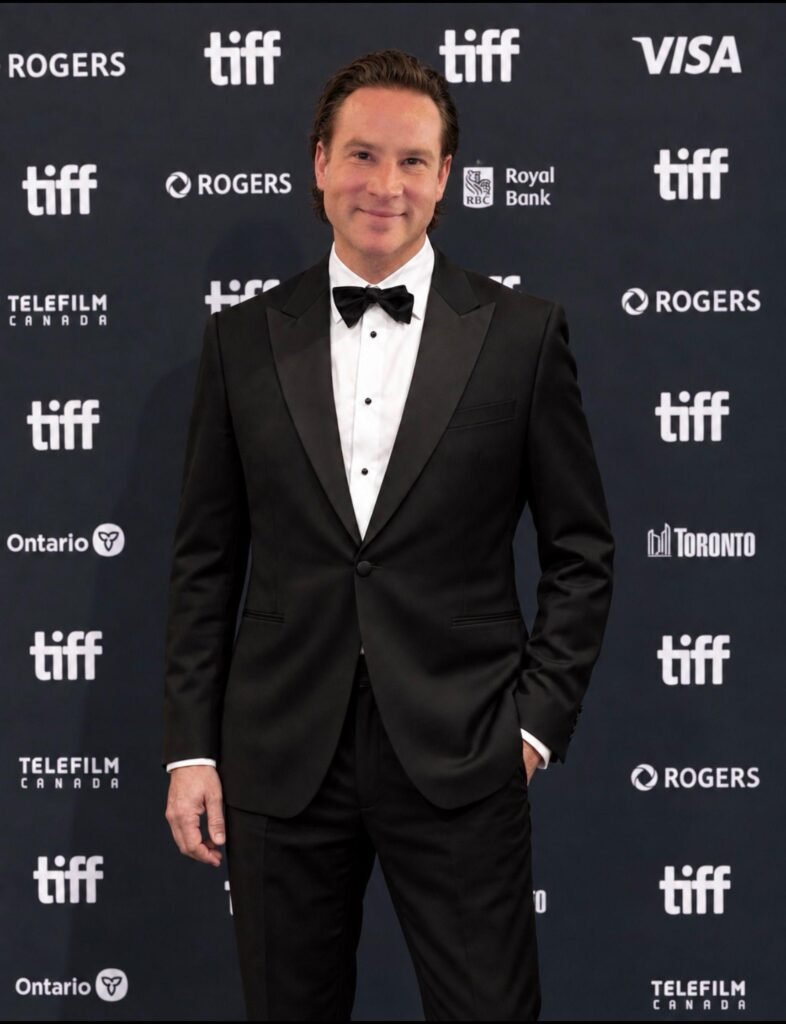
A costume designer, personal and celebrity stylist, entrepreneur and creative director, Spencer has spent his career exploring the powerful relationship between clothing and character. With credits spanning more than fifty film and television projects, his work reflects an understanding that every detail, from a silhouette to a carefully chosen fabric, can become an essential part of cinematic storytelling.
Yet what makes his professional journey particularly fascinating is the unlikely world from which he emerged.
Before building a career in costume design, Spencer established himself in corporate finance, rising through the ranks of a federal credit union and later serving as chief financial officer of a privately held corporation.
Today, he brings those two worlds together, combining the artistic instincts of a designer with the financial precision of an executive.
For Spencer, the fitting room and the boardroom were never opposites. They were simply two environments that demanded vision, intelligence and the ability to execute.
How a former CFO transformed his business expertise into an unexpected advantage behind the camera.
Martin Spencer’s career began far from film sets, fashion studios and celebrity wardrobes.
Working in corporate finance, he developed an understanding of financial management, operational efficiency and strategic decision-making. His progression through a federal credit union and eventual appointment as chief financial officer gave him the experience of managing complex business responsibilities at an executive level.
These skills would later become invaluable in an industry where ambitious creative visions must coexist with demanding schedules and tightly controlled budgets.
His educational background strengthened that foundation. Spencer completed a Global MBA with distinction, adding formal business leadership training to his professional experience.
Rather than abandoning his financial expertise when he entered the entertainment industry, he found a way to make it central to his creative practice.
For Hollywood productions, where costume departments must balance artistic ambitions with practical resources, that combination offers a distinctive perspective.
As Spencer explains:
“I read a budget the way I read a script, and I run a wardrobe department like a business unit, because it is one.”
His philosophy is straightforward. Beautiful ideas have little value if they cannot be delivered effectively.
Every wardrobe decision must support the production’s creative vision while remaining financially and operationally responsible.
It is a perspective that reflects both his business background and his commitment to the craft.
Why psychology, personal history and emotional authenticity define Spencer’s approach to costume design.
For Spencer, costume design begins long before fabric selections or fittings.
It starts with understanding the person behind the character.
When reading a screenplay, he looks beyond the dialogue to explore the character’s psychology, financial circumstances, motivations and insecurities.
What does this person want? What are they hiding? How do they see themselves? What impression are they trying to create?
The answers become the foundation of the wardrobe.
Spencer believes a well-designed costume should communicate a character’s biography almost immediately, allowing audiences to understand aspects of their identity without requiring explicit explanation.
“If the costume is doing its job, you never notice it. You just believe the person.”
This approach places storytelling above spectacle.
Whether designing clothing for a dramatic television series, a contemporary comedy or a romantic film, his objective remains consistent: create characters whose wardrobes feel like authentic extensions of their lives.
The result is a design philosophy in which every garment has a purpose, every styling choice communicates meaning and every visual detail contributes to the narrative.
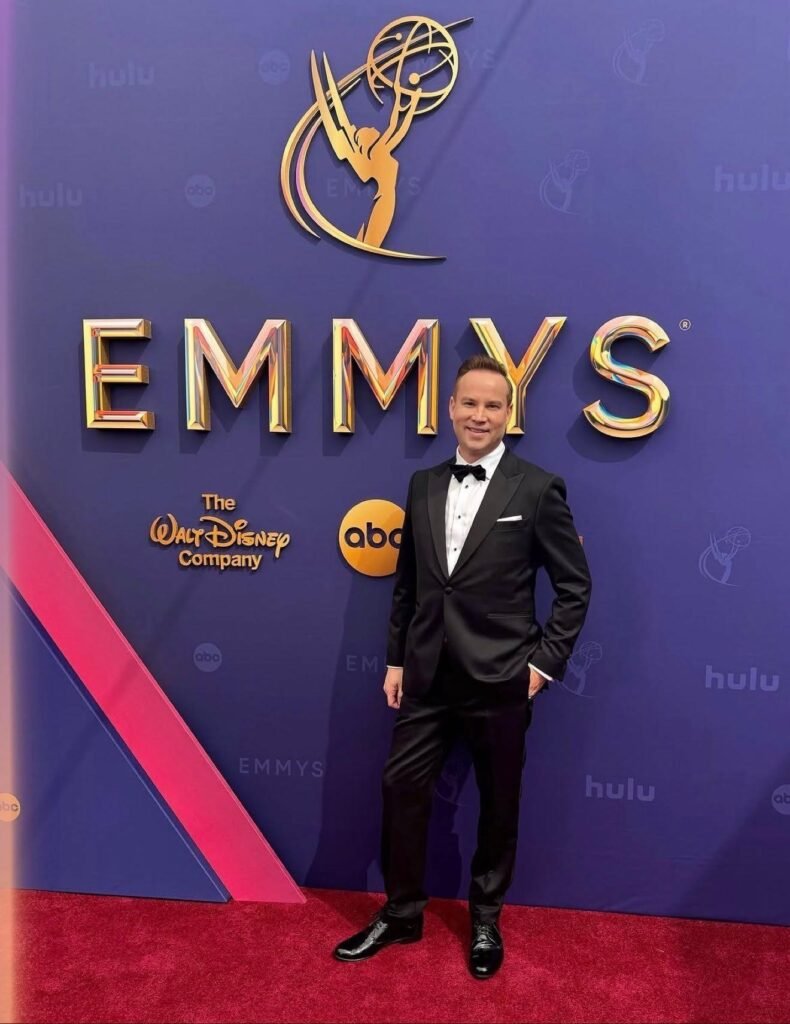
From Descendants 3 and Titans to Zoey’s Extraordinary Playlist, Spencer’s career demonstrates the versatility of character-driven design.
Throughout his career, Spencer has contributed to more than fifty film and television projects, working across a diverse range of genres, characters and production environments.
His credits include Descendants 3, Zoey’s Extraordinary Playlist, Wu Assassins, Titans, How to Rob a Bank, Curious Caterer, Christmas by Starlight and Unexpected Grace.
These projects represent dramatically different storytelling worlds, each requiring a distinct visual approach.
For Spencer, however, adapting to different productions does not mean abandoning his design philosophy. It means applying the same attention to character while responding to the particular demands of each story.
Interestingly, he does not identify the smoothest productions as necessarily the most transformative.
Instead, the challenges have often provided the greatest lessons.
Budget reductions, compressed production schedules and unexpected creative changes have forced him to rethink design strategies and make difficult decisions without compromising character authenticity.
He regards those experiences as essential to his growth.
Constraints, in his view, can sharpen creative judgment by removing unnecessary distractions and returning the designer to the fundamental purpose of the work.
Who is this character, and what would they genuinely wear?
For Spencer, that question remains more important than the size of any production budget.
A multidisciplinary creative company bringing together costume design, personal styling and artistic direction.
Spencer’s entrepreneurial ambitions eventually led him to establish House of Spencer Creative, a practice that brings multiple aspects of his expertise together under one creative identity.
The company operates across costume design, personal styling, wardrobe editing and creative direction, reflecting his belief that these disciplines share a common foundation.
Whether dressing a fictional character or refining the personal style of a real individual, the process begins with understanding identity.
House of Spencer Creative allows him to apply that philosophy across different creative environments while maintaining a consistent standard of quality.
For Spencer, founding the company was about more than developing another business.
He wanted to create an independent practice that could accommodate the full range of his creative interests.
His work as a stylist and creative director also draws on the analytical approach he developed in finance, enabling him to consider visual presentation alongside practical execution.
The result is a business model built around his unusual professional combination: creative storytelling supported by strategic thinking.

Why the designer is turning toward Japanese vintage fashion, archival luxury and the growing appeal of carefully curated resale.
Beyond television and film, Spencer continues to expand his entrepreneurial interests within the fashion industry.
He is a co-owner of Maisy & Gray, an apparel distribution business, and is developing a designer vintage resale venture focused on luxury fashion from the late 1990s and early 2000s.
The concept draws particular inspiration from Japan’s established secondhand luxury market, which Spencer admires for its attention to garment condition, preservation and curation.
His sourcing interests include archival pieces from fashion houses such as Dior, Fendi, Prada and Gucci, alongside Japanese denim and streetwear.
The planned venture will focus on authenticated, carefully selected garments acquired through established Japanese auction channels.
For Spencer, vintage luxury represents more than nostalgia.
It reflects an appreciation for craftsmanship, cultural history and distinctive design, particularly pieces from an era he believes placed considerable emphasis on garment construction and longevity.
His interest also reflects the growing role of circular fashion, where existing luxury products are rediscovered, preserved and reintroduced to new audiences.
By combining his designer’s eye with his commercial background, Spencer hopes to create a curated shopping experience for collectors who value authenticity and individuality.
It is another example of his ability to identify opportunities where artistic taste meets business potential.
How international experience continues to shape Spencer’s creative identity and professional outlook.
Spencer’s journey has taken him across international creative industries, including early modeling experience in Taipei and subsequent work on productions throughout North America.
A dual British and Canadian citizen, he is based in Vancouver while working across North America and the United Kingdom.
This international perspective has contributed to his understanding of style, cultural identity and the different visual languages used in fashion and entertainment.
His connection to the television industry is further reflected in his membership of the Television Academy.
Yet despite his professional achievements, Spencer remains focused on the practical realities of his craft.
He recognizes that the entertainment industry is undergoing significant transformation, with evolving streaming production models, financial pressures and growing expectations surrounding sustainable practices.
These changes are redefining what successful costume designers must bring to a production.
Technical ability and artistic talent remain essential, but adaptability, operational knowledge and strategic management are becoming increasingly important.
Spencer believes the designers who succeed in this environment will be those who can preserve the integrity of their character work while meeting new industry demands.
His own career offers a compelling example of how those abilities can coexist.
An exclusive interview on Hollywood storytelling, creative leadership, entrepreneurial ambition and the changing business of costume design.
Hollywood People Magazine: You began your career in corporate finance, including a CFO role, before moving into costume design. How does that background shape the way you work on a production today?
Martin Spencer: Producers notice it before anyone else does. I read a budget the way I read a script, and I run a wardrobe department like a business unit, because it is one. Finance taught me that creativity without discipline is just expensive. Every choice I make on a production has to serve the character and survive the spreadsheet. That combination is rarer than it should be in this industry.
Hollywood People Magazine: You describe your approach as character-driven costume design. What does that mean in practice when you first read a script?
Martin Spencer: I start with who the person is when nobody is watching. What they want, what they are hiding, what they can afford, what they are trying to prove. Then I dress that. The audience should understand a character’s whole biography in the first ten seconds they walk on screen, before a word of dialogue. If the costume is doing its job, you never notice it. You just believe the person.
Hollywood People Magazine: Across more than fifty film and television projects, is there one production that fundamentally changed how you design?
Martin Spencer: The productions that changed how I design were never the smooth ones. They were the ones where the budget collapsed, the timeline compressed, or the concept fell apart in week one, and I had to rebuild the wardrobe around the character with whatever was left. Constraint is the best teacher in this craft. It forces you back to the only question that matters: who is this person, and what would they actually wear?
Hollywood People Magazine: What led you to found House of Spencer Creative, and what was the vision behind it?
Martin Spencer: I wanted a practice, not just a job title. Costume design, personal styling, wardrobe editing, creative direction, they are all the same discipline applied at different scales: understanding a person and dressing them with intent. House of Spencer Creative is the umbrella that lets me do all of it under one standard.
Hollywood People Magazine: You are developing a vintage designer resale venture with Japanese sourcing. What drew you to that world, and what should collectors expect?
Martin Spencer: Japan is the best-kept secret in vintage luxury. The condition, the curation, the respect for the garment, it is unmatched. I am focused on late-90s and early-00s Dior, Fendi, Prada, and Gucci, plus Japanese denim and streetwear, sourced through established auction channels. These are pieces from the last era when luxury was built to last. Collectors should expect the real thing, authenticated and curated with a designer’s eye.
Hollywood People Magazine: As a member of the Television Academy, how do you see the craft of costume design evolving in the next five years?
Martin Spencer: The craft is accelerating. Streaming has compressed timelines, budgets keep tightening, and sustainability is no longer optional, it is an expectation. The designers who thrive will be the ones who can move fast without losing the character work, and who treat the wardrobe department as an essential part of production.
Editor’s note: The final interview response has been lightly completed for readability because the supplied answer ended mid-sentence.
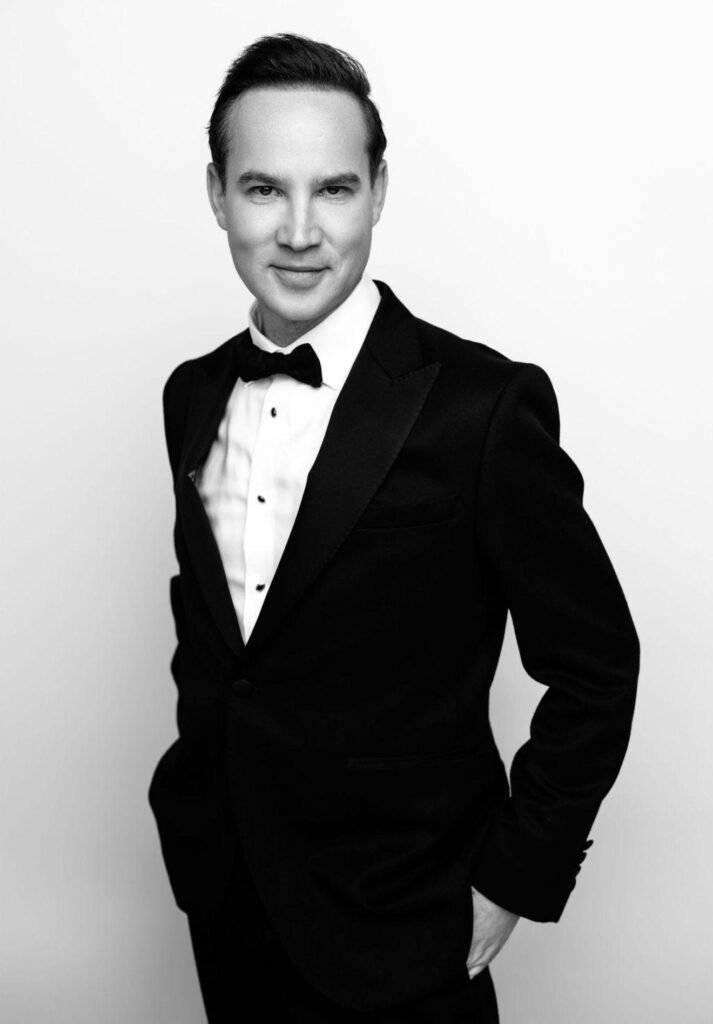
Martin Spencer is demonstrating that some of Hollywood’s most compelling creative careers are built by refusing to choose between imagination and discipline.
In an industry celebrated for its glamour, Martin Spencer represents a different kind of creative success.
His career has been shaped not by following a conventional path, but by recognizing the value of experiences that might initially appear unrelated.
Corporate finance taught him precision. Business leadership taught him accountability. Fashion gave him a language of visual expression. Film and television provided the opportunity to bring those abilities together in service of storytelling.
Through House of Spencer Creative, his apparel business interests and his developing vintage luxury venture, Spencer continues to demonstrate that artistic vision and commercial intelligence can strengthen one another.
But beneath the entrepreneurial achievements and diverse production credits remains the philosophy that defines his work.
A costume should never exist simply to be admired. It should help an audience understand a person, a story and the world that person inhabits.
For Spencer, the most successful design is often the one viewers do not consciously notice, because it belongs so naturally to the character wearing it.
Martin Spencer never had to choose between the precision of a financier and the imagination of an artist. He built a career proving that the most powerful creative work happens when the two become one.